10 Best Greenhouse Kits (November 2026)
The best greenhouse kits for backyards include the Eagle Peak 8x6 Pop-Up Greenhouse for seasonal backyard growing, the Eagle Peak 6x4 Pop-Up Greenhouse for tight garden spaces, and the KOKSRY 56x55 3-Tier Walk-In Greenhouse for seed tray organization.
On this page (11 sections)
- How we chose the best greenhouse kits
- Greenhouse kit comparison
- The best greenhouse kits for different gardens
- Which greenhouse kit structure fits your garden?
- How much greenhouse space should you plan?
- What cover and panel materials should you compare?
- How should you prepare the site and assemble the kit?
- How should you manage ventilation and winter use?
- What care routine keeps a greenhouse useful?
- Which common buying mistakes should you avoid?
- Which of the best greenhouse kits should you choose?
The best greenhouse kits for most backyard gardeners start with the Eagle Peak 8x6, which combines quick pop-up setup with room to tend plants. Choose a shelf-focused walk-in for trays, a smaller pop-up for a tight site, or a rigid-panel kit for a fixed growing area.
Buy for the plants you expect to have later in the season, not just the seedlings you have now. Our greenhouse kit overview explains how walk-in, pop-up, mini and polycarbonate styles fit different gardens.
Our picks at a glance
-
1
 Best for seasonal backyard growing
Eagle Peak 8x6 Pop-Up Greenhouse, Clear/Green
9.2/10 our score
See it on Amazon -
2
 Best for tight garden spaces
Eagle Peak 6x4 Pop-Up Greenhouse, Clear/Green
8.8/10 our score
See it on Amazon -
3
 Best for seed tray organization
KOKSRY 56x55 3-Tier Walk-In Greenhouse
8.6/10 our score
See it on Amazon
- 4
 Check it
Ohuhu 57x57 Walk-In Greenhouse
Best for many small pots - 5
 Check it
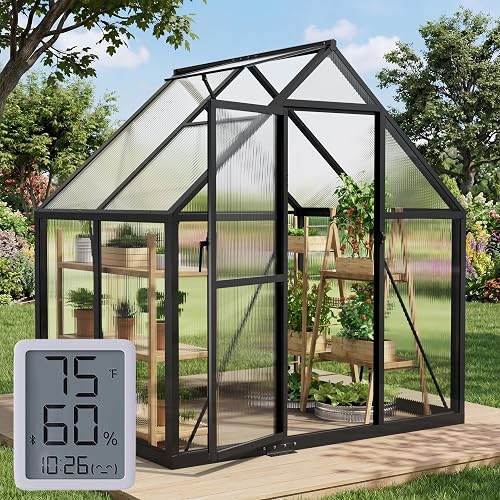
Sylviera 6x4 Greenhouse with Hygrometer
Best for compact fixed setups - 6
 Check it
Miracle-Gro 4x8 Square Walk-In Greenhouse
Best for changing plant collections - 7
 Check it
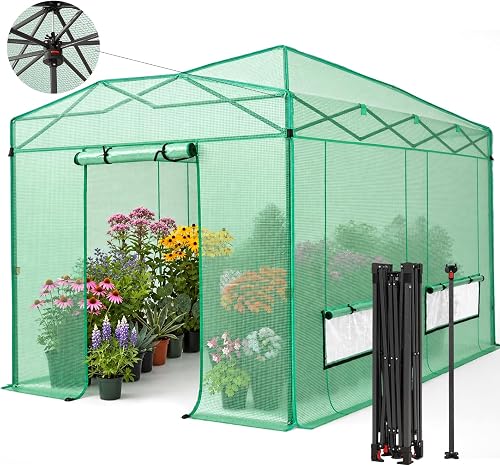
Crown Shades 12x8 Pop-Up Walk-In Greenhouse
Best for spacious seasonal layouts - 8
 Check it
VEVOR 14.6 ft Walk-In Tunnel Greenhouse
Best for long planting rows - 9
 Check it
Garvee 6x10 Aluminum Polycarbonate Greenhouse
Best for larger fixed gardens - 10
 Best for flexible entry accessCheck it
How we chose the best greenhouse kits
We compared usable space, setup style, ventilation, materials and plant storage to match each kit to a clear gardening need. The scores reflect those features and how well each design fits backyard growing.
Open floor space matters for containers, while shelves matter for trays and small pots. We also considered the work involved in moving, anchoring and assembling each structure.
Weather protection depends on the complete installation and local conditions. None of these recommendations treats a flexible cover or rigid panel as a substitute for proper anchoring and temperature management.
Greenhouse kit comparison
Compare structure and plant layout first, then use the dimensions to check whether the kit fits your site. A greenhouse with more shelves can hold more small pots without offering more room for tall plants.
| Product | Best for | Dimensions | Frame | Cover | Our score |
|---|---|---|---|---|---|
| Eagle Peak 8x6 Pop-Up Greenhouse, Clear/Green | seasonal backyard growing | 98.4 x 70.9 x 91.7 in | Alloy steel | Polyethylene (PE) | 9.2 |
| Eagle Peak 6x4 Pop-Up Greenhouse, Clear/Green | tight garden spaces | 70.9 x 47.2 x 88.6 in | Alloy steel | Reinforced polyethylene film | 8.8 |
| KOKSRY 56x55 3-Tier Walk-In Greenhouse | seed tray organization | About 56 x 56 x 78 in | Alloy steel | 8.6 | |
| Ohuhu 57x57 Walk-In Greenhouse | many small pots | 56.3 x 55.5 x 76.8 in | Alloy steel | 8.3 | |
| Sylviera 6x4 Greenhouse with Hygrometer | compact fixed setups | 45 x 67 x 77 in | Aluminum | 8.1 | |
| Miracle-Gro 4x8 Square Walk-In Greenhouse | changing plant collections | Powder-coated tubular steel | 8.0 | ||
| Crown Shades 12x8 Pop-Up Walk-In Greenhouse | spacious seasonal layouts | Alloy steel | Polyethylene (PE) | 7.9 | |
| VEVOR 14.6 ft Walk-In Tunnel Greenhouse | long planting rows | Galvanized steel | 7.8 | ||
| Garvee 6x10 Aluminum Polycarbonate Greenhouse | larger fixed gardens | 120 x 72 x 76 in | Aluminum | 6.9 | |
| Solayis 6x4 Pop-Up Greenhouse | flexible entry access | 69 x 47 x 104 in | Alloy steel | Polyethylene mesh | 6.8 |
The best greenhouse kits for different gardens
Choose the Eagle Peak 8x6 for general seasonal growing, then consider the alternatives if your space, plant collection or setup plans call for something different. Each pick below includes a reason to buy it and a reason to skip it.
Eagle Peak 8x6 Pop-Up Greenhouse, Clear/Green: Best for seasonal backyard growing
- Nominal 8 x 6 ft walk-in size
- Pre-assembled frame
- Roll-up door and mesh windows
- PE cover
A folding frame and open walk-in layout suit gardeners who want seasonal shelter without assembling separate frame poles. Plan shelving around a clear working aisle.
Pros
- One-person setup without tools
- Space to arrange separate shelves
- Replacement covers and frames available
Cons
- Shelving requires separate planning
- Needs extra attention during strong wind and snow
Best greenhouse kit for seasonal backyard growing
The Eagle Peak 8x6 suits gardeners who want a shelter they can put up without building a frame from individual poles. Its pre-assembled steel frame opens without tools, leaving you to plan the interior around your plants.
Use the open layout for a bench along one side and containers along the other, while keeping the door clear. Shelving needs its own plan, so measure benches before choosing their position.
Eagle Peak includes stakes and guy ropes, and replacement covers and frame parts are available. That parts support is useful when you want to maintain a seasonal shelter instead of replacing the whole structure after damage.
Skip this size if your growing space only needs to hold a few trays. Also choose another approach if you need dependable shelter through severe winter weather, since Eagle Peak calls for snow removal and reinforcement during storms.
Eagle Peak 6x4 Pop-Up Greenhouse, Clear/Green: Best for tight garden spaces
- Nominal 6 x 4 ft walk-in size
- Pre-assembled frame
- Two mesh windows
- Reinforced PE cover
This compact pop-up suits a small plant collection and seasonal moves. Keep the interior simple so pots and shelves don't block walk-in access.
Pros
- One-person setup without tools
- Folding frame for seasonal moves
- Roll-up door and screened airflow
Cons
- Limited room for shelves and an aisle
- Needs anchoring and weather checks
The smaller Eagle Peak suits a gardener who wants walk-in access without giving up much garden space. Its folding frame also makes sense when the shelter needs to come down between growing seasons.
Plan a simple interior rather than trying to line every wall with pots. A narrow bench or a small group of floor containers leaves more useful access than two deep shelving units.
The roll-up door and screened windows let you adjust airflow while tending plants. Place the kit where you can reach those openings without pushing through shrubs or stepping into a planting bed.
Skip it for a large seed-starting operation or several mature container crops. The compact footprint becomes restrictive once leaves spread into the aisle, and moving plants out for every watering soon defeats the benefit of walk-in access.
KOKSRY 56x55 3-Tier Walk-In Greenhouse: Best for seed tray organization
- About 56 in square
- Three tiers with eight shelves
- Two mesh windows
- PE cover
Included shelves help organize seed trays and small pots in a compact growing area. This layout favors short plants over large floor-standing containers.
Pros
- Eight shelves use vertical space
- Walk-in access for watering
- Includes ground nails and rope
Cons
- Shelf spacing needs to suit mature plants
- Shelf weight capacity needs confirmation for heavy pots
KOKSRY is a sensible choice for gardeners whose main task is organizing seed trays and small pots. Its three-tier arrangement gives those plants dedicated places without requiring separate greenhouse benches.
Sort plants by height and light needs before filling the shelves. Short seedlings can share a level, while taller starts need enough clearance to grow without pressing against the tier above.
Two mesh windows provide airflow, and ground nails and rope help secure the frame. Keep pots and foliage away from the openings so air can move through the plant collection.
Skip this layout if your main goal is growing large tomatoes or housing broad, heavy containers. Confirm shelf weight capacity before using heavy pots, and remember that wet growing mix adds weight beyond the empty container.
Ohuhu 57x57 Walk-In Greenhouse: Best for many small pots
- Compact walk-in layout
- Three tiers and 12 shelves
- Two screened windows
- Reinforced PE cover
A high shelf count suits growers sorting many small plants into separate groups. Leave space between pots for light, airflow and watering access.
Pros
- 12 shelves for plant organization
- Tool-free push-fit assembly
- Includes shelf clips, ropes and stakes
Cons
- Crowded tiers can shade lower plants
- Less suited to large floor-standing crops
Ohuhu suits gardeners managing many small plants in separate groups, such as herbs, flower starts and vegetable seedlings. Its 12 shelves provide more positions for organizing those groups within a compact footprint.
Ohuhu specifies a capacity of up to 22 lb per shelf. Spread loads rather than concentrating heavy pots in one spot, and use the included shelf clips as directed.
The push-fit frame assembles without tools, but every connection still needs to be fully seated before you fit the cover. Check the shelves for secure placement before adding watered trays.
Skip it if your plants mostly need open floor space. Filling every tier can also shade lower plants, so leave gaps and move plants as their leaves expand rather than treating the shelf count as a target to fill.
Sylviera 6x4 Greenhouse with Hygrometer: Best for compact fixed setups
- Compact panel structure
- 4 mm double-wall polycarbonate
- Aluminum frame
- Adjustable roof vents
A compact rigid-panel option for gardeners ready to prepare a base and assemble a frame. Roof vents let warm air escape above the plants.
Pros
- Double-wall polycarbonate panels
- Lockable door
- Assembly tools and labeled parts included
Cons
- Needs a planned base and panel assembly
- Limited room for wide benches
Sylviera is the compact choice for buyers who want a rigid-panel growing space and are ready for a more involved build. Its double-wall polycarbonate panels fit an aluminum frame, with roof vents for releasing warm air.
Prepare the base before opening the panel packaging. A level, square foundation helps frame parts line up and keeps the door and vents from binding during assembly.
Use the actual exterior dimensions when marking the site, since the nominal size is only a broad guide. Plan one modest bench or a small container arrangement rather than assuming the whole floor is usable growing space.
Skip Sylviera if you expect to move the greenhouse often or fold it away after spring. It also isn't the right answer to an overcrowded plant collection, since rigid walls don't create extra room inside a compact footprint.
Miracle-Gro 4x8 Square Walk-In Greenhouse: Best for changing plant collections
- 56 x 56 in footprint
- Eight removable wire shelves
- Clear PVC cover
- Tool-free snap-together frame
Removable shelves let you adjust the interior as seedlings become taller plants. The square footprint suits a small collection with changing space needs.
Pros
- Shelves can be removed for taller plants
- Tool-free frame assembly
- Double-zipper roll-up door
Cons
- Actually 4 ft 8 in square, not 4 x 8 ft
- Small floor area limits larger containers
Miracle-Gro suits gardeners whose plants outgrow their first shelf arrangement. Its eight removable shelves let you make vertical room as starts become taller plants.
The name needs care: this model is 4 ft 8 in square, not a rectangular 4 x 8 ft greenhouse. Plan from that square footprint before deciding how many containers will fit.
A snap-together frame supports the clear PVC cover, and a double-zipper roll-up door provides access and airflow. Keep the entry area open so watering cans and pots don't catch the cover as you move through it.
Skip this model if you need a long bench or several large floor containers. When changing the shelf layout, follow the assembly directions and leave structural frame pieces in place; removable shelves don't mean every crosspiece can come out.
Crown Shades 12x8 Pop-Up Walk-In Greenhouse: Best for spacious seasonal layouts
- 12 x 8 ft walk-in space
- One-push center lock
- Center support pole
- Three adjustable height levels
A broad pop-up footprint suits separate plant groups, shelving and working space. Include the center support pole when planning the aisle.
Pros
- Large walk-in growing area
- Tool-free pop-up setup
- Adjustable height
Cons
- Needs substantial clear ground
- Crown Shades recommends everyday use in mild weather
Crown Shades suits a gardener who wants separate growing and working areas within a portable shelter. Its broad footprint can accommodate plant groups without forcing every task into a narrow aisle.
The one-push center lock speeds frame setup, while a pole beneath the hub adds support. Include that pole in your layout so it doesn't conflict with a bench or your main route through the greenhouse.
Three height settings offer flexibility, but choose the height and secure the structure before filling it with plants. Moving a frame around loaded shelves makes a simple adjustment harder.
Skip it if the available site barely matches the greenhouse footprint. You'll also need room for anchoring and access, and Crown Shades recommends this design for everyday use in mild weather.
VEVOR 14.6 ft Walk-In Tunnel Greenhouse: Best for long planting rows
- Nominal 14.6 x 6.4 x 6.3 ft size
- Galvanized steel frame
- Extended PE cover edges
- Eight windows
The tunnel shape suits rows of containers or planting areas beside a central path. Multiple windows let you adjust airflow along the growing area.
Pros
- Long growing footprint
- Eight ventilation windows
- Includes stakes and tie-downs
Cons
- Requires a long, open site
- Securing cover edges adds setup work
VEVOR is the better match for a long growing row, with space for containers or planting areas on either side of a path. Its tunnel shape suits a garden plot more naturally than a small patio corner.
Eight windows let you adjust airflow along the structure. Keep access to both sides so opening them doesn't become a chore once nearby plants grow.
The extended cover edges can be weighted or buried, which makes site preparation part of the build. Finish drainage and anchoring plans before settling the cover into place.
Skip this tunnel if you need to move the greenhouse frequently or only have a short, square site. Check headroom where you'll actually work, too: a tunnel's curved sides provide less usable height near its edges than at the center.
Garvee 6x10 Aluminum Polycarbonate Greenhouse: Best for larger fixed gardens
- 6 x 10 ft size
- 720 g/m² polycarbonate panels
- Aluminum frame
- Roof vent and side gutters
This longer panel kit suits gardeners allocating a fixed space to containers or benches. Gutters help direct roof runoff away from the sides.
Pros
- More floor area than compact panel kits
- Adjustable roof vent
- Side gutter system
Cons
- Both shipping boxes must arrive before assembly
- Requires base preparation and panel fitting
Garvee suits gardeners allocating a larger fixed space to greenhouse growing. The longer panel structure gives you more room to separate a bench area from floor-standing plants.
Slide-in polycarbonate panels require an orderly assembly process. The kit arrives in two boxes, so wait for both and sort the components before beginning the frame.
Side gutters help direct roof runoff, but plan where that water will go. Keep discharge away from the doorway and foundation, and don't assume a rainwater container or collection fittings are included.
Skip this model if you need seasonal storage or haven't chosen a lasting location. Its larger footprint also means more plants, surfaces and air to manage, so size the project around your daily care time rather than unused yard space alone.
Solayis 6x4 Pop-Up Greenhouse: Best for flexible entry access
- Compact walk-in footprint
- Pre-assembled frame
- Two zippered doors
- Two mesh windows
Two doors give this compact pop-up more entry options. Its tall overall dimensions call for a clear overhead space as well as a suitable footprint.
Pros
- One-person pop-up setup
- Two zippered doors
- Includes ground stakes and wind ropes
Cons
- Limited floor area
- 104 in overall height needs overhead clearance
Solayis is worth considering when two entry points would improve access to a compact shelter. Plan the interior so both doors remain useful rather than placing shelving across one opening.
Its pre-assembled frame suits seasonal setup, and the kit includes stakes and wind ropes. The PE cover and mesh windows give you a flexible shelter with adjustable airflow.
Check overhead clearance carefully because the overall height is 104 in. That measurement describes the structure's tallest point, not equal headroom throughout the interior.
Skip it beneath low branches or where a second door would face a fence with no room to use it. If you only need one entry, the smaller Eagle Peak offers a more direct fit for a basic compact growing setup.
Which greenhouse kit structure fits your garden?
Choose a pop-up for seasonal portability, a shelf-focused walk-in for small plants, or a panel kit for a fixed growing space. Start with the work you'll do inside rather than the appearance of the cover.
A pop-up reduces frame assembly, but its full setup still includes securing the shelter and arranging plants. Our walk-in and pop-up greenhouse guide explains how those designs overlap.
Tiered kits make sense when most containers fit comfortably on shelves. Open layouts are easier to plan around larger pots, separate benches or crops that need support as they grow.
Rigid-panel kits reward careful site preparation and suit gardeners willing to leave the structure in place. Read about polycarbonate versus glass greenhouses and polycarbonate greenhouse basics if you're still choosing a panel material.
How much greenhouse space should you plan?
Choose a usable plant layout, not simply the largest footprint you can fit. A greenhouse needs an aisle, room for foliage and space outside for assembly, anchoring and care.
Mark the exterior on the ground with string, then place empty pots or cardboard bench outlines inside it. Carry a watering can through the planned doorway and check whether you can reach the back corners.
Allow for mature leaves as well as pot width. A plant that fits neatly as a seedling can later block a window, press against the cover or shade its neighbors.
Check overhead obstacles, door movement and the space needed for ropes or anchors. For a closer size comparison, read what size greenhouse you need.
What cover and panel materials should you compare?
Compare flexible covers for easier packing and rigid panels for a fixed structure. Material choice should follow your setup plans, local exposure and willingness to maintain the greenhouse.
PE and PVC covers need careful handling around frame corners, shelf edges and zippers. Keep sharp tools away from the walls, and avoid pulling a tight cover into position by its door opening.
Polycarbonate panels require correct orientation and fitting during assembly. Follow the instructions for panel faces, channels and fasteners rather than guessing which side faces the sun.
Neither a clear cover nor an insulated panel keeps temperatures suitable on its own. Light, ventilation, shading and overnight heat loss still shape the growing conditions.
How should you prepare the site and assemble the kit?
Build on a level, well-drained site with a workable anchoring plan. Correct uneven ground and drainage problems before the frame makes those areas harder to reach.
Choose a spot that receives useful sunlight during your intended growing season. Avoid roof runoff, overhanging branches and low areas that collect water after rain.
Read the instructions before laying out parts, and choose a calm day for assembly. Flexible covers and loose panels are difficult to control when wind catches them.
For a panel kit, check the base for level and square before tightening the frame. Fit doors and vents as directed, and correct alignment problems before forcing panels into place.
Anchor the structure according to its instructions and the surface beneath it. Ground stakes need suitable soil, while paving or decking calls for an attachment method appropriate to that surface.
Complete the shelter before bringing in plants. Pop-up opening time is only one part of setup; securing the frame, fitting the cover and checking access take additional work.
How should you manage ventilation and winter use?
Manage daytime heat and overnight cold as separate problems. A greenhouse can become too hot in sunshine and still fall below your plants' safe temperature before morning.
Place a minimum-and-maximum thermometer near plant height, away from direct sun. Record conditions before moving valuable or frost-sensitive plants inside.
Open reachable vents, windows or doors early enough to release heat. If the greenhouse still overheats, our greenhouse shade cloth guide explains another way to reduce sun exposure.
Don't make winter plans from cover material alone. Follow how to heat a greenhouse in winter and keep a backup location for tender plants if temperatures drop beyond your setup's capacity.
Wind and snow need their own plan. Review greenhouse precautions for wind, snow and heat, clear accumulating snow as directed, and act before conditions make outdoor work unsafe.
What care routine keeps a greenhouse useful?
Check plants, ventilation and moisture daily, then inspect the structure regularly and after rough weather. Small cover tears, loose connections and blocked openings are easier to address before they spread.
Water according to the growing mix and plant needs rather than a fixed calendar. Sheltered pots miss rainfall, while humid conditions can slow drying, so neighboring plants may need different watering schedules.
Remove dead leaves, spilled growing mix and standing water. Keep foliage from crowding the walls and leave space between pots so you can inspect leaves and water without soaking everything nearby.
Clean covers and panels with methods approved for their material. Before storing a flexible shelter, let the cover dry fully and keep its frame parts together so the next setup starts with a complete kit.
Which common buying mistakes should you avoid?
Avoid buying for shelf count, nominal size or winter language alone. Those details only help when they fit your plants, site and care routine.
- Filling every shelf immediately: Leave growing room and light paths instead of turning the interior into dense storage.
- Ignoring mature crop height: Plan where tall stems and supports will go before buying a tiered kit.
- Blocking ventilation with benches: Keep openings reachable and leave room for air to pass the plants.
- Delaying anchoring: Secure the empty shelter during setup rather than waiting for a windy forecast.
- Assuming accessories are included: Check your plan for shelving, base materials, temperature monitoring and any separate climate equipment.
Also consider who will adjust the greenhouse while you're away. If nobody can open it during a sunny spell, resolve that daily care problem before filling it with sensitive plants.
Which of the best greenhouse kits should you choose?
Choose from the best greenhouse kits by matching your hardest space or care limit first. Rule out any model that won't leave a usable aisle, allow proper anchoring or fit your plants at mature size.
Pick Eagle Peak 8x6 for seasonal growing with working room, or its smaller version when the site sets the limit. Choose KOKSRY or Ohuhu for organized small plants, and Miracle-Gro when removable shelving matters as plants grow.
Choose Sylviera or Garvee when you're ready to prepare a fixed base. Crown Shades suits a broad seasonal layout, VEVOR suits long rows, and Solayis fits a compact site where both doors will be useful.
Before ordering, mark the layout on the ground and check your route to water. Use our backyard greenhouse guide to confirm the style once you know how the space will work.
Our top 3 picks at a glance
-
1
Best for seasonal backyard growing
Eagle Peak 8x6 Pop-Up Greenhouse, Clear/Green
9.2/10 our score
See it on Amazon -
2
Best for tight garden spaces
Eagle Peak 6x4 Pop-Up Greenhouse, Clear/Green
8.8/10 our score
See it on Amazon -
3
Best for seed tray organization
KOKSRY 56x55 3-Tier Walk-In Greenhouse
8.6/10 our score
See it on Amazon
Frequently asked questions
What should I compare when choosing a greenhouse kit?
Compare usable space, setup style, ventilation and anchoring before choosing a cover material. Draw your pots, shelves and walking path inside the actual dimensions, then decide whether you need seasonal portability or a fixed structure; include base preparation, separate shelving and temperature control in your plan.
Are pop-up greenhouse kits good for winter?
Pop-up kits can extend the growing season, but don't count on them alone to protect frost-sensitive plants through freezing nights. Check minimum temperatures inside and follow the model's weather instructions; Eagle Peak recommends clearing snow and reinforcing its pop-up structures during storms; keep a backup shelter ready.
Is polycarbonate better than a PE greenhouse cover?
Polycarbonate suits a fixed panel structure, while a flexible PE cover suits portability and seasonal storage. Neither choice removes the need for anchoring, ventilation or cold-weather planning; if you're considering other rigid materials too, compare polycarbonate and glass greenhouse options before committing to a base.
How much space do I need for a walk-in greenhouse?
You need the full exterior footprint plus space for entry, anchoring and maintenance. Inside, leave a usable path after accounting for mature plants and shelves; mark the layout on the ground before ordering, and practice reaching the back corners with a watering can rather than judging by floor area alone.
Do greenhouse kits need ventilation?
Yes, greenhouse kits need ventilation because sunlight can raise indoor temperatures even on cool days. Open doors, windows or roof vents as conditions require, and check the temperature near your plants; our guide to greenhouse vents, fans and doors explains how to plan airflow beyond a single opening.


