9 Best Small Greenhouses for Backyards (November 2026)
The best small greenhouses for backyards include the Eagle Peak 6x4 Pop-Up Greenhouse for quick seasonal setup, the KOKSRY 56x55 3-Tier Walk-In Greenhouse for seed tray growers, and the Sylviera 6x4 Greenhouse with Hygrometer for a dedicated growing spot.
On this page (18 sections)
- The best small greenhouses for backyards
- How we chose these small greenhouses
- Eagle Peak 6x4 Pop-Up Greenhouse, Clear/Green
- KOKSRY 56x55 3-Tier Walk-In Greenhouse
- Sylviera 6x4 Greenhouse with Hygrometer
- Miracle-Gro 4x8 Square Walk-In Greenhouse
- Specilite 56x56 Walk-In Greenhouse
- Greengro 28x57 Walk-In Greenhouse
- Sylviera 6x6 Walk-In Greenhouse with Hygrometer
- WUKHG 6x4 Greenhouse with Thermometers
- Solayis 6x4 Pop-Up Greenhouse
- What should you measure before choosing a small greenhouse?
- Which small greenhouse cover and frame fit your garden?
- How should you set up a compact greenhouse?
- How do you manage heat and airflow in a small greenhouse?
- How do you water and care for plants inside?
- What mistakes should you avoid with a small greenhouse?
- Which small greenhouse should you choose?
The best small greenhouse for most backyards is the Eagle Peak 6x4 Pop-Up Greenhouse, Clear/Green because its pre-assembled frame makes seasonal setup simple. Choose KOKSRY for seed trays, Miracle-Gro for changing shelf layouts, or Sylviera 6x4 for a dedicated panel enclosure.
Start with the plants you want to shelter, then measure the space they need at their largest size. A greenhouse that fits empty can become awkward once pots, foliage and a watering can share the entrance.
Our backyard greenhouse types guide explains the main styles. If trays and small pots are your priority, read how to use a mini greenhouse before planning the interior.
Our picks at a glance
-
1
 Best for quick seasonal setup
Eagle Peak 6x4 Pop-Up Greenhouse, Clear/Green
8.8/10 our score
See it on Amazon -
2

-
3
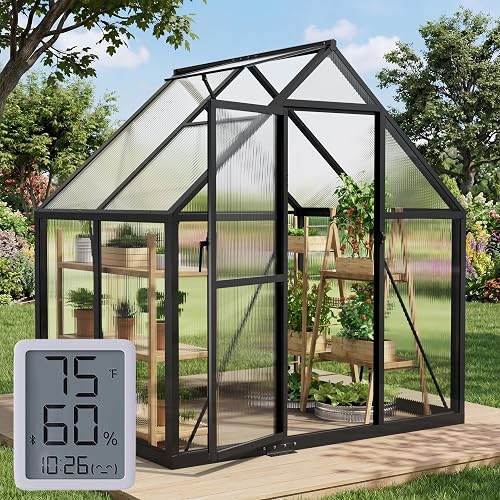 Best for a dedicated growing spot
Sylviera 6x4 Greenhouse with Hygrometer
8.1/10 our score
See it on Amazon
- 4
 Check it
Miracle-Gro 4x8 Square Walk-In Greenhouse
Best for changing plant collections - 5
 Check it
Specilite 56x56 Walk-In Greenhouse
Best for seasonal relocation - 6
 Check it
Greengro 28x57 Walk-In Greenhouse
Best for narrow patio spaces - 7
 Check it
Sylviera 6x6 Walk-In Greenhouse with Hygrometer
Best for expanding plant collections - 8
 Check it
WUKHG 6x4 Greenhouse with Thermometers
Best for patient kit builders - 9
 Best for flexible entry layoutsCheck it
The best small greenhouses for backyards
Eagle Peak is the strongest all-around choice for seasonal setup, while the shelf houses and panel kits serve more specific growing plans. The comparison below highlights footprint, cover and layout so you can narrow the options before reading each write-up.
| Product | Best for | Footprint | Cover | Frame | Our score |
|---|---|---|---|---|---|
| Eagle Peak 6x4 Pop-Up Greenhouse, Clear/Green | quick seasonal setup | 70.9 x 47.2 in | Reinforced polyethylene film | Alloy steel | 8.8 |
| KOKSRY 56x55 3-Tier Walk-In Greenhouse | seed tray growers | 56 x 56 in | Polyethylene | 8.6 | |
| Sylviera 6x4 Greenhouse with Hygrometer | a dedicated growing spot | 45 x 67 in | Polycarbonate panels | Aluminum | 8.1 |
| Miracle-Gro 4x8 Square Walk-In Greenhouse | changing plant collections | 56 x 56 in | PVC | 8.0 | |
| Specilite 56x56 Walk-In Greenhouse | seasonal relocation | 55.1 x 55.1 in | Polyethylene | 7.9 | |
| Greengro 28x57 Walk-In Greenhouse | narrow patio spaces | 57 x 28 in | Polyethylene | 7.7 | |
| Sylviera 6x6 Walk-In Greenhouse with Hygrometer | expanding plant collections | 73 x 71 in | Polycarbonate panels | Aluminum | 7.2 |
| WUKHG 6x4 Greenhouse with Thermometers | patient kit builders | 66.93 x 44.69 in | Polycarbonate panels | Aluminum | 7.0 |
| Solayis 6x4 Pop-Up Greenhouse | flexible entry layouts | 69 x 47 in | Polyethylene mesh | 6.8 |
How we chose these small greenhouses
We compared usable space, setup, ventilation and plant access to judge how each design fits a small backyard. The order favors useful compact layouts and manageable assembly over extra floor area alone.
Shelf space matters for seedlings, but a taller potted plant needs clearance above its leaves. We also considered whether you can move the structure, reach its openings and arrange plants without blocking the entrance.
Eagle Peak 6x4 Pop-Up Greenhouse, Clear/Green
Choose the Eagle Peak for seasonal shelter with minimal frame assembly. It's the best fit here if you want to put up a walk-in enclosure without sorting tubes and connectors.
Eagle Peak 6x4 Pop-Up Greenhouse, Clear/Green: Best for quick seasonal setup
- 70.9 x 47.2 x 88.6 in
- Pre-assembled frame
- Roll-up door and mesh windows
- No tools required
Choose this pop-up when you want a seasonal walk-in shelter without building a frame from separate parts. The open interior lets you plan around your own pots or shelves.
Pros
- Pre-assembled frame
- No tools required
- Walk-in access
Cons
- Eagle Peak advises reinforcement during storms
- Shelving sold separately
The pre-assembled frame opens without tools, and Eagle Peak designs it for one-person setup. Shelving is separate, which suits growers who want to arrange floor pots or choose their own bench.
Plan that layout before buying furniture for it. A deep bench can leave too little room to crouch, turn around or carry a full watering can past leaves.
The roll-up entrance and mesh windows give you several ways to release warm air. Keep nearby foliage clear of those openings so ventilation remains easy as plants grow.
Skip this model if you want a structure you can leave unattended through severe weather. Eagle Peak advises reinforcing it during storms and clearing snow, so seasonal use still needs weather planning.
For a dedicated rigid enclosure, compare the Sylviera 6x4 greenhouse.
KOKSRY 56x55 3-Tier Walk-In Greenhouse
Choose KOKSRY if seed trays and small containers make up most of your collection. Its 8 shelves across 3 tiers put growing space above the ground instead of relying on floor pots.
KOKSRY 56x55 3-Tier Walk-In Greenhouse: Best for seed tray growers
- 56 x 56 x 78 in
- 8 shelves across 3 tiers
- PE cover
- Two mesh windows
A shelf-focused choice for starting batches of seedlings and keeping small pots organized. Its square layout needs more patio width than the narrow Greengro.
Pros
- Eight shelves
- Mesh windows for airflow
- Walk-in design
Cons
- Shelves occupy growing space
- Allow room beyond the footprint for access
Allow for a 56 in square footprint, despite the 55 in measurement in the name. More importantly, check that your trays fit the shelves without hanging into the entrance.
Plan around full-grown seedlings rather than freshly sown trays. Leaves can crowd neighboring plants well before roots need a larger pot, so leave gaps instead of filling every available surface.
Put plants with similar light and watering needs together. Check lower trays separately, because plants above them can change how much light and dripping water they receive.
Skip this design if you mainly grow tall plants in large containers. For a collection that changes from small starts to taller pots, compare the Miracle-Gro walk-in greenhouse.
Sylviera 6x4 Greenhouse with Hygrometer
Choose the Sylviera 6x4 for a dedicated growing spot with rigid walls. It suits gardeners ready to prepare the location and build a kit rather than pack away a seasonal frame.
Sylviera 6x4 Greenhouse with Hygrometer: Best for a dedicated growing spot
- 45 x 67 x 77 in
- 4 mm double-wall polycarbonate panels
- Aluminum frame
- Adjustable roof vents
A compact rigid enclosure for gardeners who can prepare a dedicated location and assemble a panel kit. Roof vents provide an outlet for warm air.
Pros
- Rigid panel construction
- Adjustable roof vents
- Lockable door
Cons
- Sylviera recommends a helper for assembly
- Frame and panels require assembly
Its 4 mm double-wall polycarbonate panels sit in an aluminum frame. Adjustable roof vents let warm air escape above the plants, while the lockable door controls entry.
Think through the interior before assembling it. One narrow bench and a clear route may serve you better than filling both sides with shelving you can't comfortably reach.
Sylviera recommends a helper and includes tools and labeled parts. Set aside clear ground beside the base for organizing panels, and choose a calm day so loose pieces remain manageable.
Skip this kit if frequent relocation is central to your plan. If you want another compact rigid option and can handle careful assembly, compare the WUKHG 6x4 greenhouse.
Miracle-Gro 4x8 Square Walk-In Greenhouse
Choose Miracle-Gro when your plant heights change through the season. Its removable shelves let you revise the interior as seedlings become taller container plants.
Miracle-Gro 4x8 Square Walk-In Greenhouse: Best for changing plant collections
- 56 x 56 in footprint
- 8 removable wire mesh shelves
- Clear PVC cover
- Tool-free snap-together frame
Removable shelves suit growers whose seedlings become taller potted plants as the season progresses. This is a 4 ft 8 in square greenhouse, despite the short display name.
Pros
- Eight removable shelves
- Tool-free setup
- Double-zipper roll-up door
Cons
- Flexible cover rather than rigid panels
- Needs nearly 5 ft of floor width and depth
The actual footprint is 56 x 56 in, or 4 ft 8 in square. The short display name doesn't mean this is a 4 x 8 ft rectangle.
Its tubular steel frame snaps together without tools, and the fitted clear PVC cover has a double-zipper roll-up door. Keep the entrance accessible because it's also your main adjustable airflow opening.
Remove shelves before foliage grows through them. Trying to rearrange a crowded greenhouse later can damage stems and make watering harder than it needs to be.
Store unused shelves together so you can restore the layout for the next seed-starting season. Skip this option if your site needs a rigid enclosure or your pots already fill most of the floor.
For a layout centered on keeping small plants on tiers, compare the KOKSRY 3-tier greenhouse.
Specilite 56x56 Walk-In Greenhouse
Choose Specilite if dismantling and relocating the shelter is part of your seasonal routine. Its detachable parts assemble without tools, making it a different approach from a pre-assembled pop-up.
Specilite 56x56 Walk-In Greenhouse: Best for seasonal relocation
- 55.1 x 55.1 x 77.6 in
- Detachable parts
- PE cover
- Two screen side windows
Detachable construction suits gardeners who expect to dismantle and relocate their plant shelter. The square footprint works best where access remains clear on the working side.
Pros
- Detachable structure
- No tools required
- Two screen windows
Cons
- Relocation requires taking parts apart
- Needs close to a 5 ft square area
The flexible PE enclosure has a roll-up door and two screen side windows. Place it where you can reach both windows without squeezing behind a fence or stepping through planted beds.
Plan capacity from container width and leaf spread. A group of narrow nursery pots takes far less room than the same number of mature plants in broad containers.
Before relocation, remove plants and loose contents rather than trying to shift a loaded structure. Keep connectors grouped during dismantling so the next setup stays organized.
Skip Specilite if you want the frame to open as one connected unit. For a tighter site where width matters more than dismantling style, see the Greengro walk-in greenhouse.
Greengro 28x57 Walk-In Greenhouse
Choose Greengro when a square greenhouse would consume too much patio width. Its 28 x 57 in footprint is the narrowest in this group.
Greengro 28x57 Walk-In Greenhouse: Best for narrow patio spaces
- 28 x 57 x 76 in
- 3 tiers and 4 shelves
- Zippered door and screened windows
- Four stakes and four ropes
Choose this narrow enclosure when a square greenhouse would block too much patio space. Its compact interior calls for careful tray and pot placement.
Pros
- Narrow footprint
- Screened windows
- Stakes and ropes included
Cons
- Limited room for wide pots
- Narrow interior needs careful access planning
The interior has 3 tiers and 4 shelves for smaller containers. Screened windows and a zippered entrance provide access to the growing space and ways to adjust airflow.
A narrow footprint doesn't automatically make a narrow passage suitable. Mark the greenhouse on the ground and check that people can still pass safely when you're tending plants.
Four stakes and four ropes are included, and the extended bottom cover accepts edge weights. Plan where those will sit so they don't become obstacles beside the patio.
Skip this model for broad containers or plants with spreading leaves. If you have space to give pots a wider arrangement, consider the Sylviera 6x6 panel greenhouse.
Sylviera 6x6 Walk-In Greenhouse with Hygrometer
Choose the Sylviera 6x6 if your planned collection needs more floor area than the smaller kits allow. Its 73 x 71 in footprint gives you more room to arrange containers and a working route.
Sylviera 6x6 Walk-In Greenhouse with Hygrometer: Best for expanding plant collections
- 73 x 71 x 77 in
- 4 mm double-wall polycarbonate panels
- Aluminum frame
- Adjustable roof vent
The larger floor plan suits gardeners who need room to arrange more containers while retaining a compact backyard structure. Choose it only after marking out the full working area.
Pros
- More floor area than the smaller panel kits
- Adjustable roof vent
- Lockable door
Cons
- Largest footprint in this group
- Sylviera recommends a helper for assembly
The aluminum frame holds double-wall polycarbonate panels, with an adjustable roof vent and a lockable door. Plan the location around the full structure rather than squeezing it into the last unused corner.
Use the added room for access as well as plants. Keeping a clear center makes it easier to spot dry pots, remove damaged leaves and reach containers at the back.
Sylviera recommends a helper for assembly and suggests silicone for panel gaps; silicone isn't included. Follow the assembly instructions so any sealing leaves intended drainage and ventilation paths open.
Skip this size if it would block a garden path or leave no room to work outside. The Sylviera 6x4 model is the more sensible panel choice for a tighter layout.
WUKHG 6x4 Greenhouse with Thermometers
Choose WUKHG if you can prepare a flat base and build carefully with a helper. It's a compact panel kit for buyers who are comfortable aligning separate frame parts and panels.
WUKHG 6x4 Greenhouse with Thermometers: Best for patient kit builders
- 66.93 x 44.69 x 76.77 in
- 4 mm polycarbonate panels
- Aluminum frame
- Adjustable ventilation window
A compact panel option for buyers prepared to build carefully on a flat base. WUKHG gives clear guidance on alignment and recommends working with a helper.
Pros
- Compact panel enclosure
- Adjustable ventilation
- Lockable door
Cons
- Two-person assembly recommended
- Uneven ground can cause alignment problems
The enclosure combines polycarbonate panels, an aluminum frame, adjustable ventilation and a lockable door. Its compact shape works best with a simple interior rather than deep furniture on every side.
WUKHG recommends keeping screws loose during alignment, then tightening them once the parts line up. That makes base preparation especially useful: forcing a frame to fit uneven ground can create problems later.
The brand advises against assembly in strong wind or heavy rain. Allow enough time to follow the sequence without rushing to finish before bad weather arrives.
Skip it if you need a shelter you can open quickly and take down often. For that use, compare the Eagle Peak pop-up greenhouse.
Solayis 6x4 Pop-Up Greenhouse
Choose Solayis if two-door access solves a specific layout problem. Its pre-assembled pop-up frame suits seasonal use, with mesh windows offering more airflow openings.
Solayis 6x4 Pop-Up Greenhouse: Best for flexible entry layouts
- 69 x 47 x 104 in
- Pre-assembled frame
- Two doors
- Two mesh windows
Two doors give you more access options when planning a pop-up growing space. Its tall exterior needs careful clearance checks beneath roofs, balconies and branches.
Pros
- Pre-assembled frame
- Two doors
- Stakes and ropes included
Cons
- 104 in height needs overhead clearance
- Allow space for ropes and edge weights
Check overhead clearance carefully: the exterior reaches 104 in high. Low roof edges, balconies and overhanging branches can rule out a spot that otherwise fits its footprint.
Decide how you'll use both entrances before filling the interior. Pots placed across an opening remove the access benefit, so preserve the route that made you choose this design.
Stakes and wind ropes are included, and the cover edges allow added weight. Account for that anchoring area when planning nearby paths and planting space.
Skip this option if you have limited overhead clearance or only one useful approach to the greenhouse. In that case, the extra doorway offers little reason to choose it over the Eagle Peak greenhouse.
What should you measure before choosing a small greenhouse?
Measure the footprint, working route and anchoring area before choosing a small greenhouse. Nominal sizes help you compare categories, but exact exterior measurements decide whether a model fits.
Mark the corners with string or removable tape. Put your largest pots inside that outline and walk through the layout while carrying the tools you use most.
Check sunlight at different times of day. A spot beside a fence may receive morning light but lose much of its useful growing light later.
Also look at drainage after rain. Avoid a low point where water collects beneath pots or makes the entrance muddy.
How much space does a small greenhouse need around it?
A small greenhouse needs clearance for entry, maintenance and its anchoring system. There's no single gap that suits every model, because doors, ropes and assembly methods differ.
Make sure you can reach covers, fasteners and ventilation openings without moving the whole structure. On a deck or balcony, confirm the space permits the structure and a suitable anchoring method before buying.
Our greenhouse size guide helps you judge whether a compact model leaves enough growing room. For the wider selection process, see how to choose a greenhouse.
Which small greenhouse cover and frame fit your garden?
Choose a flexible cover house for seasonal use or a panel kit for a dedicated location. Then decide whether your plants need shelf space, open floor space or a mix.
PE and PVC covers can be removed for storage, but portability depends on the frame as well. A detachable tube frame involves different setup work from a connected pop-up frame.
Polycarbonate panels suit a fixed growing arrangement where you're willing to prepare a base and assemble the structure. Read whether polycarbonate is good for greenhouses if you're weighing that material.
Don't choose by cover alone. Exposure, anchoring, joint condition and ongoing care all matter to the finished structure.
How should you set up a compact greenhouse?
Prepare the location and anchor the frame before adding plants. Working in that order leaves room to check alignment and correct problems before the interior becomes crowded.
- Clear and level the area using a base suitable for the chosen kit.
- Sort parts and read the full assembly sequence before joining them.
- Build in calm weather and use the recommended number of people.
- Secure the structure according to its instructions and your ground surface.
- Check doors, vents and cover tension before bringing plants inside.
On soil, stakes need firm ground and correct placement. On paving, don't assume cover ties or loose pots replace a suitable anchoring plan.
Check the forecast before setup and have a plan for moving vulnerable plants. Our greenhouse wind, snow and heat guide explains the main weather risks.
How do you manage heat and airflow in a small greenhouse?
Vent early and monitor conditions near the plants, because a small enclosure can warm quickly in sunshine. A cool outdoor morning doesn't mean the closed interior will stay cool.
Place a thermometer away from direct sun and contact with the cover. Check overnight lows as well as daytime highs, since those extremes guide what you can grow.
Open vents or windows before heat builds, then adjust the door if more airflow is needed. Leave gaps between plants so air can move through the collection.
If opening the enclosure isn't enough, consider seasonal shading. Our greenhouse shade cloth guide explains how to reduce excess sun without leaving plants too dark.
Our guide to greenhouse ventilation covers airflow options in more detail. Roof vents, windows and doors still need your attention unless you add suitable automatic controls.
How do you water and care for plants inside?
Check the potting mix before watering instead of following a fixed schedule. Shelter changes rain exposure, airflow and drying speed, so outdoor watering habits may no longer fit.
Water the root zone rather than routinely wetting leaves. Empty standing water from trays when the plants don't need it, and keep drainage holes clear.
Inspect new plants before adding them to the enclosure. Remove dead leaves and check leaf undersides regularly, since a cover doesn't keep every pest out.
Keep plants with similar temperature needs together. A warm-loving crop and a cool-season seedling may need different care even when both fit on the same shelf.
What mistakes should you avoid with a small greenhouse?
Avoid buying for maximum capacity instead of usable space. A crowded greenhouse makes watering, ventilation and plant checks harder.
- Filling every shelf: Leave room for leaves to grow and for you to lift trays out.
- Blocking openings: Keep pots and foliage away from doors, windows and vents.
- Assuming warmth lasts overnight: An unheated greenhouse can still reach freezing temperatures.
- Ignoring mature height: Tall plants need growing clearance, not just room for the container.
- Skipping weather checks: Inspect anchors and fasteners, especially after wind.
Clean covers and panels gently so dirt doesn't keep reducing light. Use a soft cloth and suitable mild cleaner, following the material's care instructions rather than scrubbing with abrasive tools.
Before storing a flexible cover, let it dry fully. Keep small frame parts together and label them so seasonal setup doesn't begin with missing connectors.
Which small greenhouse should you choose?
Choose your small greenhouse by the job it must do. Match the interior to your plants, then confirm that the full setup fits your site.
- Quick seasonal shelter: Choose Eagle Peak for its pre-assembled frame and open interior.
- Batches of seedlings: Choose KOKSRY when shelf organization matters most.
- Changing plant heights: Choose Miracle-Gro for removable shelves.
- A narrow patio edge: Choose Greengro if a square model takes too much width.
- A dedicated panel enclosure: Start with Sylviera 6x4, or choose its 6x6 version when your layout needs more floor area.
Measure before committing, including the space needed to tend plants and secure the structure. If your collection needs shelves more than walk-in floor space, continue to our best mini greenhouses guide.
Our top 3 picks at a glance
-
1
Best for quick seasonal setup
Eagle Peak 6x4 Pop-Up Greenhouse, Clear/Green
8.8/10 our score
See it on Amazon -
2
-
3
Best for a dedicated growing spot
Sylviera 6x4 Greenhouse with Hygrometer
8.1/10 our score
See it on Amazon
Frequently asked questions
What size small greenhouse works for a backyard?
A greenhouse around 4 x 6 ft or 5 x 5 ft suits many small collections of pots and seed trays; choose from your planned layout rather than the size name alone. Mark the exterior footprint, leave an entrance path, and allow extra space for anchoring and reaching ventilation openings.
Is a pop-up or panel greenhouse better for a small garden?
Choose a pop-up for seasonal setup and easier removal, or a panel greenhouse for a dedicated growing location; your available assembly time and storage plans matter as much as the cover material. Our greenhouse kit overview explains how these styles compare with other backyard options.
Do small greenhouses need ventilation?
Yes, small greenhouses need ventilation to release heat and damp air; open vents, mesh windows or doors before the interior becomes too warm for your plants, and check conditions again when sunshine changes. Our guide to greenhouse ventilation explains how to plan airflow through a compact enclosure.
Can you use a small greenhouse in winter?
A small greenhouse can extend the growing season, but an unheated enclosure can still freeze at night; match your plants to the temperatures you can maintain, monitor overnight lows, and prepare somewhere safer for tender pots. Our guide to greenhouses in winter explains the limits of passive protection.


