8 Best Pop-Up Greenhouses (November 2026)
The best best pop up greenhouses include the Eagle Peak 8x6 Pop-Up Greenhouse for everyday backyard gardening, the Eagle Peak 6x4 Pop-Up Greenhouse for small patio gardens, and the Eagle Peak 8x6 Pop-Up Greenhouse for busy plant workspaces.
On this page (9 sections)
- How we chose these best pop up greenhouses
- Compare pop-up greenhouse sizes, covers and access
- Best pop-up greenhouses for different yards
- What should you check before buying a pop-up greenhouse?
- How should you set up and anchor a pop-up greenhouse?
- How do you manage heat, water and daily plant care?
- Can a pop-up greenhouse protect plants through winter?
- Common pop-up greenhouse mistakes to avoid
- Which best pop up greenhouse should you choose?
The Eagle Peak 8x6 Pop-Up Greenhouse, Clear/Green is the best pop up greenhouse for most gardeners who want quick setup and enough room to tend plants inside. Choose a smaller model for a modest collection, or a larger shelter only when you have a clear plan for the extra space.
A pop-up greenhouse makes the most sense for seasonal growing, seed starting and sheltering pots in a manageable location. Its flexible cover and folding frame also mean that anchoring, airflow and weather checks become part of your gardening routine.
If you're deciding between portable and more permanent structures, compare our best walk-in greenhouses and walk-in vs pop-up greenhouse guide.
Our picks at a glance
-
1
 Best for everyday backyard gardening
Eagle Peak 8x6 Pop-Up Greenhouse, Clear/Green
9.2/10 our score
See it on Amazon -
2
 Best for small patio gardens
Eagle Peak 6x4 Pop-Up Greenhouse, Clear/Green
8.8/10 our score
See it on Amazon -
3
 Best for busy plant workspaces
Eagle Peak 8x6 Pop-Up Greenhouse, Gray/White
8.5/10 our score
See it on Amazon
- 4
 Check it
Eagle Peak 6x4 Pop-Up Greenhouse, Gray/White
Best for compact seedling stations - 5
 Check it
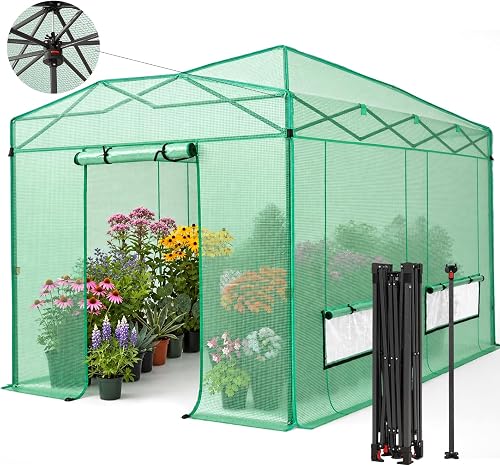
Crown Shades 12x8 Pop-Up Walk-In Greenhouse
Best for larger plant collections - 6
 Check it
Sannwsg 8x6 Walk-In Pop-Up Greenhouse
Best for accessory-focused beginners - 7
 Check it
Porayhut Pop-Up Greenhouse Tent
Best for seasonal pot protection - 8
 Best for frequent plant accessCheck it
How we chose these best pop up greenhouses
We prioritized usable growing space, simple setup and practical plant access, then compared cover construction, ventilation and storage. Clear dimensions matter because shelves, mature plants and a gardener must share the same small enclosure.
The scores reflect how well each model fits seasonal backyard use. A larger footprint earns its place only when it helps you reach and care for plants, while included accessories matter less than fit and airflow.
Several lower-ranked options have conflicting construction or size descriptions. Those conflicts affect purchase planning, so their write-ups explain what needs clarification without repeating every specification.
Compare pop-up greenhouse sizes, covers and access
Choose the smallest size that leaves a useful working aisle after you add plants and shelves. A shelter that fits the yard can still be too crowded to water comfortably.
| Product | Best for | Dimensions | Cover | Frame | Our score |
|---|---|---|---|---|---|
| Eagle Peak 8x6 Pop-Up Greenhouse, Clear/Green | everyday backyard gardening | 98.4 x 70.9 x 91.7 in | Polyethylene (PE) | Alloy steel | 9.2 |
| Eagle Peak 6x4 Pop-Up Greenhouse, Clear/Green | small patio gardens | 70.9 x 47.2 x 88.6 in | Reinforced polyethylene film | Alloy steel | 8.8 |
| Eagle Peak 8x6 Pop-Up Greenhouse, Gray/White | busy plant workspaces | Polyethylene (PE) | Alloy steel | 8.5 | |
| Eagle Peak 6x4 Pop-Up Greenhouse, Gray/White | compact seedling stations | Polyethylene (PE) | Alloy steel | 8.3 | |
| Crown Shades 12x8 Pop-Up Walk-In Greenhouse | larger plant collections | Polyethylene (PE) | Alloy steel | 7.9 | |
| Sannwsg 8x6 Walk-In Pop-Up Greenhouse | accessory-focused beginners | Polyethylene (PE) | Alloy steel | 7.3 | |
| Porayhut Pop-Up Greenhouse Tent | seasonal pot protection | Polyethylene (PE) mesh and Oxford fabric | 7.3 | ||
| Solayis 6x4 Pop-Up Greenhouse | frequent plant access | 69 x 47 x 104 in | Polyethylene mesh | Alloy steel | 6.8 |
For other frame styles, see our guide to backyard greenhouse kits and types. If you only need space for a few trays or pots, our best mini greenhouses guide covers smaller formats.
Best pop-up greenhouses for different yards
The Eagle Peak 8x6 Clear/Green is the most balanced choice here, while the alternatives serve smaller sites, larger collections or specific access needs. Read each recommendation against your daily routine, including how you'll water and ventilate the space.
Eagle Peak 8x6 Pop-Up Greenhouse, Clear/Green: Best for everyday backyard gardening
- Nominal 8 x 6 ft walk-in size
- One-person setup
- Zippered roll-up door and mesh windows
- Pre-assembled steel frame
Choose this for a seasonal growing space where you can step inside to water, turn pots and tend seedlings. It balances useful working room with a smaller footprint than the largest pick.
Pros
- Room for plants and a working aisle
- One-person setup with no tools
- Replacement covers and frame parts available through Eagle Peak
Cons
- Needs more yard space than compact options
- Requires snow clearing and storm precautions
Choose the Eagle Peak Clear/Green when you want a working greenhouse rather than a covered storage spot. Its interior suits a layout with plants around the edges and room to step inside for pruning, watering and rotating trays.
The pre-assembled frame opens without tools, which is useful if you plan to put the greenhouse away between growing seasons. Eagle Peak also offers replacement covers and frame parts, a useful consideration when buying a structure with a flexible outer cover.
Plan shelves before filling the space with pots. Keep the entrance clear and place plants that need daily attention within easy reach, rather than behind heavier containers.
Skip this model if your available space only matches its base dimensions with no room left for anchoring or outside access. A smaller greenhouse in a workable spot is a better choice than this one squeezed against a fence.
Eagle Peak recommends snow clearing and reinforcement during storms. Read whether a pop-up greenhouse can be used in winter before relying on it for cold-season plants.
Eagle Peak 6x4 Pop-Up Greenhouse, Clear/Green: Best for small patio gardens
- Nominal 6 x 4 ft walk-in size
- One-person setup
- Zippered roll-up door and mesh windows
- Pre-assembled steel frame
A good fit for a modest plant collection in a sheltered patio or small yard. Plan a narrow shelf layout so the space remains easy to enter.
Pros
- Compact footprint with walk-in access
- No tools needed for setup
- Folds for seasonal relocation
Cons
- Limited space for deep shelves
- Tall or spreading plants can crowd the aisle
The smaller Eagle Peak Clear/Green suits a few trays and a modest pot collection in a sheltered patio or compact yard. It gives you a place to step inside without committing the space required by the larger picks.
Use shallow shelving along one side first. Adding deep shelves to both sides can leave you turning sideways to water, especially once leaves grow beyond their pots.
Its folding frame makes sense for gardeners who need the patio back after seed-starting season. Move the structure empty, then arrange plants again once the frame and cover are secure in the new location.
Skip it for mature, spreading plants or a permanent potting bench. The compact floor plan works best when plants move out into the garden as they grow.
Before buying, mark a shelf and aisle on the ground with tape or string. Stand in that outline with a watering can to see whether the layout supports your routine.
Eagle Peak 8x6 Pop-Up Greenhouse, Gray/White: Best for busy plant workspaces
- 8 x 6 ft walk-in space
- PeakPush center lock
- PE cover with reinforced corners
- Wind ropes and stakes
Consider this for a working greenhouse with shelves and a clear central aisle. Reinforced cover corners and a powder-coated frame are useful construction details for seasonal outdoor use.
Pros
- Reinforced cover corners
- 6 ft walls
- Roll-up door and mesh windows
Cons
- Requires room outside for anchoring
- Reinforced corners do not make it storm-proof
The gray and white Eagle Peak suits gardeners who want space for regular plant work and prefer its reinforced cover construction. It combines scrim-reinforced corners with a powder-coated steel frame and a PeakPush center lock.
The 6 ft walls are useful when planning upright shelving near the sides. Still allow space between leaves and the cover, and avoid pressing shelf corners into the fabric.
This is a sensible alternative to the leading Clear/Green model when the corner reinforcement and gray and white finish matter to you. Neither detail is a reason to place a portable greenhouse on an exposed site.
Use the included ropes and stakes according to Eagle Peak's instructions, then check that the cover sits evenly before loading the interior. A crooked setup can make doors awkward to use.
Skip this version if you mainly want extra floor space over the leading pick. Both occupy the same nominal size class, so choose between them on construction details and your preferred finish.
Eagle Peak 6x4 Pop-Up Greenhouse, Gray/White: Best for compact seedling stations
- 6 x 4 ft walk-in space
- PeakPush center lock
- PE cover with reinforced corners
- Zippered roll-up door and mesh windows
Choose this for trays and smaller pots that need regular attention without taking over the yard. Its compact floor area calls for shallow shelving and a clear entrance.
Pros
- Compact walk-in layout
- Reinforced cover corners
- No-tool setup
Cons
- Little spare room for a potting bench
- Growing plants can quickly fill the available space
The compact gray and white Eagle Peak fits a seedling station that stays easy to enter. It's a good match for gardeners who start plants in trays and move them outdoors before the greenhouse becomes crowded.
Reinforced cover corners and a no-tool center lock give it a clear purpose as a seasonal shelter. Plan the interior around regular tray checks, with the seedlings you water most often closest to the entrance.
Keep potting supplies elsewhere if possible. Bags of compost, empty containers and tools can consume the space you need for new growth.
Choose it over a larger shelter when your collection is small enough that unused floor area would become storage clutter. Skip it if you expect to keep tall vegetables inside through maturity.
Its 4 specified vents offer openings to manage, but their count doesn't replace temperature checks. Open available ventilation early on sunny days and adjust it as outdoor conditions change.
Crown Shades 12x8 Pop-Up Walk-In Greenhouse: Best for larger plant collections
- 12 x 8 ft walk-in space
- One-push center lock
- Internal support pole under the hub
- Roll-up door and mesh windows
The largest stated footprint here suits gardeners who need separate areas for trays, pots and taller plants. Plan the aisle around the internal center support.
Pros
- Room for several growing zones
- Center support pole under the hub
- 3 adjustable height levels
Cons
- Needs a broad, level site
- Crown Shades recommends everyday use in mild weather
Choose Crown Shades for several groups of plants that need separate growing areas. Its larger footprint gives you more options for trays, floor-standing pots and shelves than the compact models.
The internal support pole under the hub needs a place in your layout. Plan paths around it before arranging benches, so carrying a tray or watering can doesn't require an awkward turn.
Three adjustable height levels let you adapt the structure to different plant heights. Set the height before loading the greenhouse, following the brand's instructions for the frame and cover.
Skip this model if you only have a handful of pots or expect to move the shelter often. Extra floor area also means more space to keep clear, inspect and manage for airflow.
Crown Shades recommends everyday use in mild weather. If your growing plan depends on added warmth, work through how to heat a greenhouse in winter before choosing a large enclosure that needs heating.
Sannwsg 8x6 Walk-In Pop-Up Greenhouse: Best for accessory-focused beginners
- Walk-in design
- Pre-assembled frame
- Roll-up side window with screen
- Thermometers and plant growth lights included
Included thermometers and plant growth lights may appeal to gardeners building their first setup. Resolve the conflicting size information before committing space or buying shelves.
Pros
- Thermometers and plant growth lights included
- One-person setup
- Screened roll-up side window
Cons
- Only 1 vent specified
- Conflicting assembled dimensions
The Sannwsg appeals most to beginners who want growing accessories included, especially thermometers for tracking conditions. Temperature readings are useful from the first day because a covered space can warm quickly in sunlight.
The included plant growth lights may help complete a setup, but choose lighting around your plants' needs. Their inclusion alone doesn't tell you how much growing area they can light.
The main buying issue is size: the nominal 8 x 6 ft designation conflicts with measurements of 117 x 117 x 102 in. Confirm the assembled dimensions with Sannwsg before ordering, especially for a fixed patio space.
It has a screened side opening and 1 specified vent. Keep your ventilation plan simple, with easy access to the opening whenever the greenhouse needs cooling.
Skip this option if you need to order fitted shelves or prepare a base immediately. Resolve the footprint first, then decide whether the accessories add enough value for your setup.
Porayhut Pop-Up Greenhouse Tent: Best for seasonal pot protection
- 48 x 48 x 63.7 in size
- Folds to a compact carry size
- PE mesh cover with Oxford fabric
- Roll-up door and two screen windows
This short enclosure suits small pots that need temporary shelter and gardeners who value compact storage. It is less suitable as a workspace for standing and potting.
Pros
- Folds into an included carry bag
- Screen windows for airflow
- Includes 12 ground stakes
Cons
- Limited standing headroom
- Conflicting frame material descriptions
The Porayhut suits temporary shelter for smaller pots, with compact storage as its clearest advantage. Its short enclosure is more useful for reaching in to tend plants than for standing inside to work.
At 63.7 in tall, it leaves limited headroom for many adults. Check your tallest plant with its pot included, then allow extra space for new growth.
The tent folds to 24 x 24 x 2.75 in and includes a carry bag. That makes it worth considering when storage space matters as much as the area used during the growing season.
Its frame descriptions conflict, so choose it for the compact enclosure format rather than a particular frame material. The roll-up door and side screen windows give you access points to manage during warm weather.
Skip it for tall crops, a potting bench or frequent standing work. Arrange small pots so you can reach the back row without leaning on the cover or stepping over containers.
Solayis 6x4 Pop-Up Greenhouse: Best for frequent plant access
- Nominal 6 x 4 ft walk-in size
- Pre-assembled frame
- 2 doors
- 2 mesh windows
Consider this compact option when access from 2 doors fits your routine. Confirm the cover and assembly method because Solayis gives conflicting descriptions.
Pros
- 2 doors
- 2 mesh windows
- Wind ropes and ground stakes included
Cons
- Heavier than the compact Eagle Peak options
- Conflicting assembly and cover descriptions
The Solayis is worth considering when 2-door access fits the way you tend plants. Keep both approaches clear if you plan to use them, rather than blocking one with shelves or stored supplies.
Its compact footprint comes with a height of 104 in. Check overhead branches, roof edges and other obstacles before selecting a location.
The frame includes a powder-coated finish, wind ropes and stakes, with cover-edge space for added weight. Follow the assembly instructions when securing it rather than improvising attachments to the cover.
Solayis gives conflicting descriptions of the cover and assembly process, which lowers its appeal beside the clearer Eagle Peak options. Base your decision on the PE-cover pop-up model and resolve those details before committing.
At 36.4 lb, it also weighs more than the compact Eagle Peak picks. Skip it if frequent carrying is your main priority; consider it when access matters more than moving the packed structure.
What should you check before buying a pop-up greenhouse?
Start with plant size, working space and site exposure, then compare frame and cover details. A greenhouse must support your routine after the plants grow, not just hold the pots you have today.
Choose floor space around mature plants
Measure shelf depth and the width plants will reach, including leaves that extend beyond containers. Leave an aisle wide enough to enter, turn and carry a watering can without brushing everything around you.
For seedlings, plan where trays will go after they outgrow the shelter. For plants staying inside longer, reserve space for their mature shape from the start.
Use our greenhouse size guide if you're deciding whether a compact layout will still work later in the season.
Check the site beyond the base
Leave room outside for ropes, anchors and reaching the sides. Avoid placing the entrance where a fence, raised bed or parked chair will block it.
Watch where rainwater runs before choosing the spot. A low patch that collects water can leave you working in mud even when the cover keeps direct rain off the plants.
Check sunlight over the day, too. A site shaded by a fence in spring may behave very differently from an open area, so choose it around the light your plants need.
Match the cover to seasonal use
A flexible PE cover suits a portable structure that you may fold and store. It needs care around sharp shelves, rubbing branches and places where fabric catches on the frame.
Rigid panels serve a different purpose if you want a more permanent structure. Read polycarbonate vs plastic greenhouse covers before choosing based only on how quickly the frame opens.
Do the best pop up greenhouses need mesh windows?
Mesh windows help release heat while keeping a screened opening, making them useful for daily temperature control. Their position and open area matter more than counting vents alone.
Screens can limit entry for some pests, but gaps around the base and an open door remain entry points. Check plants before bringing them inside rather than treating the cover as a pest barrier.
For layout and airflow choices, see our guide to greenhouse vents, fans and doors.
How should you set up and anchor a pop-up greenhouse?
Set up the empty frame on level ground in calm weather, then fit the cover and secure the structure before adding plants. Follow the model's instructions for locks, supports and anchor points.
Clear stones and sharp debris from the working area. Open the frame evenly, keeping fingers away from moving joints and stopping if a section binds.
Check that the door closes without strain before tightening cover attachments. Forcing a zipper on an uneven frame can put needless tension on the fabric.
Use stakes suited to the ground and the designated rope attachment points. A stake that slides out of loose or wet soil needs attention before the next windy day.
On paving, plan an anchoring method approved for the model and surface. Don't assume a few pots inside will secure the frame, since their weight may have no direct connection to it.
Recheck ropes and attachments after setup and after weather changes. If severe conditions are forecast, follow the brand's instructions for removing the cover or storing the shelter, and move plants early.
How do you manage heat, water and daily plant care?
Use temperature readings and plant conditions to decide when to ventilate and water. The weather outside is only part of the picture because sunlight can heat an enclosed space quickly.
Place a thermometer near plant height, away from direct sun where possible. Check daytime highs and overnight lows before leaving sensitive plants inside for a full growing period.
Open ventilation before the interior becomes too warm. If your schedule keeps you away during sunny hours, choose plants and a seasonal setup you can manage without depending on midday adjustments.
Water the potting mix when the plant needs it rather than following a fixed daily schedule. Warm air, humid air, pot size and plant growth all affect how quickly containers dry.
Keep leaves from resting against the cover and avoid crowding pots tightly together. Space makes watering easier and helps air move around the plants.
Wipe away debris, remove dead leaves and inspect seams and zippers regularly. When packing up, clean and dry the cover fully, then store it away from sharp tools and places where rodents may damage it.
Can a pop-up greenhouse protect plants through winter?
A pop-up greenhouse can shelter plants and extend a growing season, but an unheated cover cannot guarantee safe overnight temperatures. Choose winter shelter around the cold tolerance of the plants you want to keep.
Check actual overnight lows inside before trusting it with tender plants. Keep a backup location ready when a forecast threatens temperatures those plants cannot handle.
Snow and wind also affect whether leaving the structure up makes sense. Clear accumulation according to the manufacturer's instructions, and don't enter a frame that appears damaged or unstable.
If you plan to add heat, consider equipment suitability, clearances, moisture and running costs before buying the shelter. Our guide to how greenhouses work in winter explains the limits of trapped daytime warmth.
Common pop-up greenhouse mistakes to avoid
The most costly mistakes are overcrowding, weak anchoring and leaving the cover closed in sun. Prevent them with a layout and daily routine before the greenhouse fills with plants.
- Buying for empty floor space: include shelves, mature leaves and your working aisle in the plan.
- Leaving setup unfinished: anchor the structure before treating it as ready for plants.
- Using the cover as a support: keep shelves, ties and heavy pots off the fabric unless the instructions allow an attachment.
- Assuming winter protection means warmth: measure overnight temperatures and prepare another shelter for tender plants.
- Packing away a damp cover: dry it first so dirt and moisture don't sit trapped during storage.
Which best pop up greenhouse should you choose?
Choose the Eagle Peak 8x6 Clear/Green if you want the best pop up greenhouse for a useful seasonal workspace. Choose the smaller Clear/Green Eagle Peak when a modest plant collection and limited patio space set the brief.
The gray and white Eagle Peaks suit buyers who prefer reinforced cover corners in the same two size classes. Crown Shades makes more sense when you can use separate growing zones and have room around the larger structure.
Choose Porayhut for short plants and compact storage. Consider Sannwsg or Solayis only after resolving the size or construction details that affect your plan.
Before ordering, mark the footprint, place an imaginary shelf and walk the aisle with a watering can. For more on the leading option, read our Eagle Peak greenhouse review.
Our top 3 picks at a glance
-
1
Best for everyday backyard gardening
Eagle Peak 8x6 Pop-Up Greenhouse, Clear/Green
9.2/10 our score
See it on Amazon -
2
Best for small patio gardens
Eagle Peak 6x4 Pop-Up Greenhouse, Clear/Green
8.8/10 our score
See it on Amazon -
3
Best for busy plant workspaces
Eagle Peak 8x6 Pop-Up Greenhouse, Gray/White
8.5/10 our score
See it on Amazon
Frequently asked questions
Can a pop-up greenhouse stay outside all winter?
A pop-up greenhouse needs a winter plan based on local wind, snow and overnight temperatures; a flexible cover can shelter plants, but it does not guarantee frost protection or support a heavy snow load. Follow the model's weather instructions and move vulnerable plants before conditions exceed what the shelter can handle.
Should you leave a pop-up greenhouse door open?
Open the door when extra airflow is needed and conditions allow it; a closed greenhouse can get too warm in sun even on a cool day, so use a thermometer near plant height. Secure the rolled door, keep mesh windows available and close openings as temperatures fall if plants need warmth.
How much room should you leave inside a pop-up greenhouse?
Leave enough room to enter, turn and reach the farthest pot without brushing plants against the cover; plan around shelf depth and mature plant width rather than empty floor area. A narrow shelf on one side often works better in a compact greenhouse than deep shelves on both sides.


